
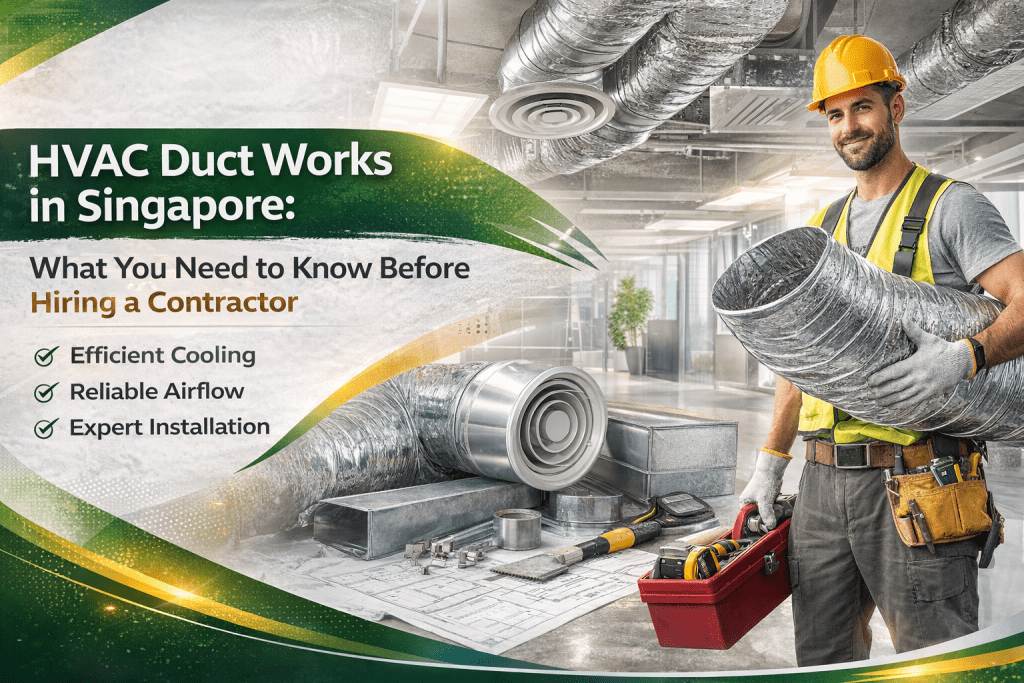
When people think about air-conditioning, they usually focus on the unit itself. But here’s the truth most people in Singapore overlook — your HVAC duct works play a huge role in how well your cooling system performs.
Whether it’s an office, factory, retail space, or residential property, proper HVAC duct works in Singapore can make the difference between efficient cooling and constant air-con problems.
Let’s break it down in a simple, no-nonsense way.
What Are HVAC Duct Works?
HVAC duct works are the network of ducts that distribute cool or warm air from your air-conditioning system to different parts of a building. If ducts are poorly designed, installed, or maintained, you may face:
- Uneven cooling
- Higher electricity bills
- Air leakage and dust issues
- Reduced air-con lifespan
In a hot and humid country like Singapore, well-planned duct works aren’t optional — they’re essential.
Why HVAC Duct Works Matter in Singapore
Singapore’s climate puts constant pressure on HVAC systems. Offices, malls, factories, and even homes rely on air-conditioning almost year-round.
Proper HVAC duct works in Singapore help with:
- Better airflow distribution
- Improved indoor air quality
- Energy efficiency
- Comfortable temperature control
Bad duct works = wasted money and uncomfortable spaces.
Types of HVAC Duct Works Commonly Used
Depending on the building and usage, different duct systems are used:
1. GI (Galvanized Iron) Ducting
Most commonly used for commercial and industrial projects. Durable, strong, and long-lasting.
2. Pre-Insulated Ducts
Popular for energy efficiency. These ducts reduce heat loss and improve system performance.
3. Flexible Ducts
Used in smaller areas or where space is limited. Best when combined with main rigid ducting.
A professional contractor will recommend the right duct type based on your building, not a one-size-fits-all solution.
Signs You Need HVAC Duct Work Repair or Replacement
Not sure if your ducting is causing problems? Look out for these signs:
- Some rooms are colder than others
- Air-con runs longer but cooling feels weak
- Strange noises from ducts
- Dust buildup despite regular cleaning
- Rising energy bills
If you notice these issues, it’s time to inspect your HVAC duct works.
Choosing the Right HVAC Duct Works Contractor in Singapore
This part matters a lot.
When selecting a contractor for HVAC duct works in Singapore, make sure they offer:
- Proper site inspection
- Custom duct design
- Quality materials
- Skilled installation team
- Clear timelines
A reliable company won’t rush the job or cut corners.
At Green Build Engineering & Construction Pte. Ltd., HVAC duct works are handled with a practical, detail-oriented approach — from design to installation and maintenance — ensuring airflow efficiency and long-term performance.
HVAC Duct Works for Commercial & Industrial Spaces
Commercial and industrial buildings have different requirements compared to homes.
Well-executed HVAC duct works are especially important for:
- Offices
- Warehouses
- Factories
- Retail outlets
- Data centers
Correct duct sizing and layout help maintain temperature consistency and reduce operational costs.
Maintenance Is Just as Important as Installation
Even the best duct works need maintenance.
Regular HVAC duct maintenance helps:
- Prevent air leakage
- Maintain airflow efficiency
- Improve indoor air quality
- Extend system lifespan
In Singapore’s dusty and humid environment, duct cleaning and inspection should never be ignored.
Final Thoughts
If you’re planning a new project or facing cooling issues, investing in proper HVAC duct works in Singapore is one of the smartest decisions you can make.
Good ducting means:
- Better comfort
- Lower energy bills
- Longer-lasting HVAC systems
And most importantly — peace of mind.
If you want your HVAC duct works done right the first time, work with experienced professionals who understand Singapore’s climate, building standards, and real-world usage.